Showing posts with label spectrum. Show all posts

Saturday, May 22, 2010

India 3G spectrum bid results

0 comments

At the closer of the India’s 3G auctions, most of bidders including the biggies Bharti Airtel, Vodafone and Reliance Communications emerging winners for the 3G airwaves. While latest entrant in GSM arena Videocon Telecommunications Ltd and Etisalat DB were unable to win a single circle.

The GSM biggies Vodafone Essar, Bharti Airtel and dual technology operator Reliance Communications (Rcom) bagged the lucrative Delhi and Mumbai circles for a whopping Rs.3316.93 crore & Rs 3247.07 crore respectively and hope to get good 3G subscriber base initially with the commercial launch in both circles.

India’s largest GSM service provider Bharti Airtel, which had pan-India 3G ambitions, had to settle for just for 13 telecom circles along with Reliance Communications and Aircel. The company said in a statement “We would like to point out that the auction format and severe spectrum shortage along with ensuing policy uncertainty, drove the prices beyond reasonable levels. As a result, we could not achieve our objective of pan India 3G footprint in this round.”

Bharti Airtel has emerged successful in Delhi-NCR, Mumbai, Andhra Pradesh, Karnataka, Tamil Nadu (including Chennai service area), UP West, Rajasthan, West Bengal, Himachal Pradesh, Bihar, Assam, North East and Jammu & Kashmir.

Another Pan-India operator Aircel emerged as the biggest spender which bagged 3G license for its strong hold areas and covers almost South and East region of the country. Aircel has the same number of telecom circles for 3G services as Bharti Airtel. But at very lower financial outflow compare to Airtel, it is paying almost half the price that Bharti Airtel is.

Mr. Gurdeep Singh, COO, Aircel said to TelecomTalk “After several rounds of competitive bidding, Aircel has bagged 13 telecom circles in 3G for Rs. 6500 crores which will allow us to take our Data Strategy to the next level. This further opens new revenue opportunities and gives way to a dynamic Business Model.”

He also added “We now cover the whole of Southern and Eastern belt where we have our strong presence and in J&K, Punjab & UP (East) as well. With this we will be able to offer seamless connectivity and meaningful products and services to our consumers which will eventually change their life and open a world of possibilities.”

The 3rd largest GSM mobile service operator Idea Cellular is the winner in 11 service areas at very lowest financial outflow out of the five other big service providers. Idea cellular win eleven circles at total cost of Rs. 5768.59 cr. According to the company’s statement “With the 2.1 GHz (3G Spectrum) footprint of Idea Cellular covers a very high proportion (81%) of Idea’s total national revenues. Idea believes its bidding strategy and the Auction results significantly enhance Idea’s competitive position in the market.”

Reliance Communications (Rcom) which has bagged 3G spectrum in 13 circles including Delhi and Mumbai as well as category ’C’ circle said that ” Company plans to strongly leverage its media, gaming, cinema and broadcasting capabilities to offer its customers a unique true 3G experience.”

While the Tata Teleservices Ltd (TTSL) have given up Delhi, Mumbai and taken 3 category A and 6 category B circles. In an statement TTSL said “The company management is very delighted with the outcome of the 3G spectrum auction, especially as we have bagged the best telecom Circles from the perspective of their cumulative market potential, particularly so when we take into consideration the overall spend on these.

Significantly, we have covered the entire geography of prosperous India on the Western side, while there is no entanglement with Category ‘C’ circles– therefore, this has proven to be a most capex-optimized bidding for us.TTSL did pursue the major metros in the country, but decided to drop out of the bidding when the sheer outlay made these a winner’s curse”

Wednesday, May 19, 2010

Why costly spectrum is not so good for the country

0 comments
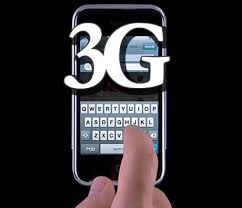
iPhone

The entire debate on spectrum allocation is as if only the government and the telecom companies (telcos) mattered, without reference to the people, the primary stakeholders.

Two arguments favour making spectrum pricy through auctions. One, spectrum is a scarce resource whose value escapes the government when companies make capital gains selling their allocated spectrum (which is what selling stake in these companies achieves). Two, this is needed to fairly allocate spectrum among multiple claimants. Neither argument is persuasive.

Spectrum auction is far from the only way for the government to capture its value. A tax on capital gains or windfall profits would do just as well, when a company unlocks the value of its spectrum via sale of stake or spectrum when that is permitted.

In fact, the state appropriates a share of the value created by spectrum when it takes a share of the revenue of telcos. HUL or Tata Motors only pays corporate tax and does not share its revenue with the government, but Bharti and Vodafone do. But this is not all.

The spread of telecom boosts economic growth. By the network effect: the greater the number of people connected to the network , the greater the value of being connected for each person. With ubiquitous phones, decisions get taken faster.

Productivity increases — a CEO calls up his driver before he leaves his room so that by the time he reaches the building entrance, his car is waiting for him; a multi-location video conference clinches a crucial decision that would otherwise have called for many high-value mandays of travel.

The entire IT-BPO success story is thanks to India's telecom revolution. Phones have multiplied the incomes of selfemployed tradesmen (carpenter, etc). Rural producers realise better prices because their phone tells them the mandi price. Such enhanced incomes, cumulatively, drive up demand for goods and services. If there had been no telecom revolution, would Bangalore have seen a real estate boom?

The government captures a share of this additional output through direct and indirect taxes. But creating larger output, which is the tax base, is not telecom's only contribution to tax revenue. Telecom has also enabled a tax information network, which has raised the share of tax collections in GDP — direct taxes grew at more than 30% a year even as the nominal economic growth was around 15%.

If we assume that without the telecom revolution, India's GDP growth would have been one percentage point lower and that the tax/GDP ratio would have been one percentage point lower, the increase in tax revenue just in 2009-10 attributable to telecom is Rs 90,000 crore, assuming the lower growth since 2003-04 , when the teleocm revolution gained scale.

India's most certainly would not have had its telecom revolution had spectrum been as expensive in 2003, as 3G spectrum now, that is, close to Rs 68,000 crore.

Some argue that call rates would not go up because of higher spectrum charges because competition would force players to hold tariffs . This might be true for a specific phase of the industry's growth but is not sustainable, and will show up in slower expansion and lower quality of services. India cannot continue to have a world class telecom industry, even if its capital costs (spectrum fees capitalised becomes just that) are many times higher than they need be is plain silly.

Upfront spectrum fees transfer investible resources from the non-government sector to the government. They jack up the cost of telecom services or slow down their expansion and quality improvement and, vitally, impede roll out of real broadband —1 gigabits of data per second (what Google is planning for US homes and is also envisaged in the US national broadband plan).

Instead, if the government keeps spectrum cheap, and focuses on the larger tax base created by faster growth of telecom, its revenues would be bigger over time and the Indian people would be better off.

But, in the absence of auctions, how do we allocate the spectrum to companies? The answer has two parts. In telecom, the degree of competition is determined by the total availability of spectrum and the minimum spectrum required by each player. Suppose four players are possible.

Who these players are matters a lot to telcos, but next to nothing to consumers, so long as all of them are competent. Take lots, have a beauty parade, make the telco CEOs do the Iron man — whatever the method of selection, it should not impact the cost or quality of telecom services.

However, the bigger problem in this model is the obsolete idea of dedicated spectrum for a telco. India needs to invest in technology that will create a real-time spectrum exchange, so that all the spectrum is available to all the telcos to service their customers, with the exchange matching demand for and supply of spectrum at every point of time, the usage charge accruing to the government right then and there. Just because this departs from the legacy model of the west, it does not mean that we should not put people first.

Costly spectrum only serves to transfer investible resources to the government and slow down telecom spread. Indian teleocm needs huge investments in broadband to secure what will soon be a competitive norm: 1 Gb per second. Cheap spectrum and fast telecom spread boost GDP growth and yield more revenue than when spectrum is costly.

Monday, May 17, 2010

Bids for one all-India 3G licence reach $2.65 bln

0 comments

NEW DELHI: Bids for one set of nationwide third-generation (3G) mobile spectrum licences in India reached Rs 120.69 billion rupees ($2.65 billion) on the 24th day of an auction, government data showed on 7th may.

As of may 7th, 137 rounds of bidding had been completed, the Department of Telecommunications (DoT) said on its website.

Bidding for the spectrum, which would allow firms to offer high-speed Internet and other premium services such as video calling on mobile phone, started on April 9 and is expected to wind up in coming days.

The base price for one set of pan-India licences was set at Rs 35 billion.

The government will sell four such licences -- three from the auction and one set to state-run telecoms firms which would have to match the highest bid price paid by the private operators.
 

Copyright 2010 All Rights Reserved Revolution Two Church theme by Brian Gardner Converted into Blogger Template by Bloganol dot com